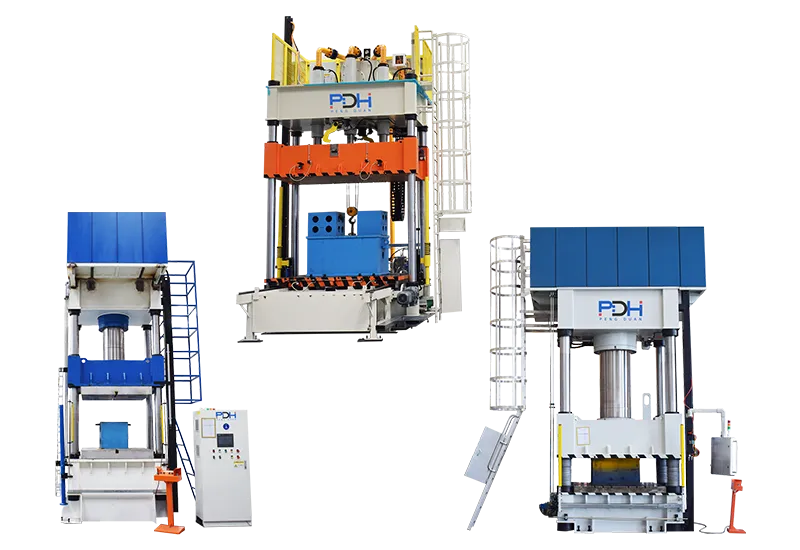
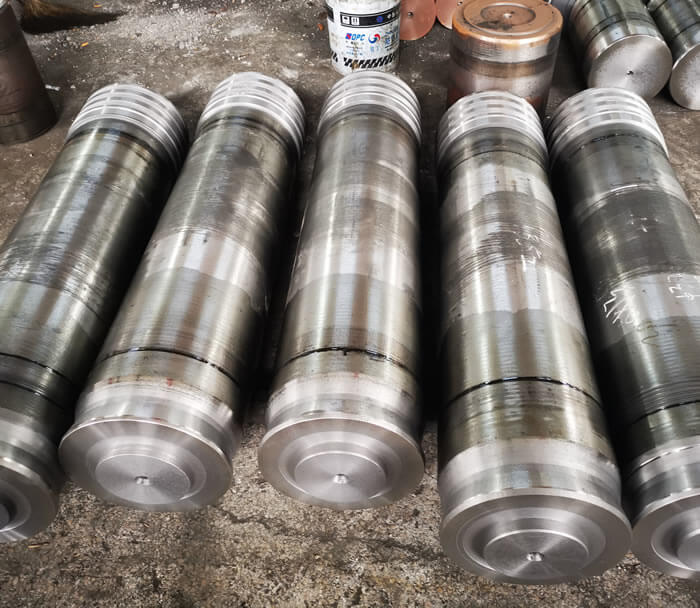
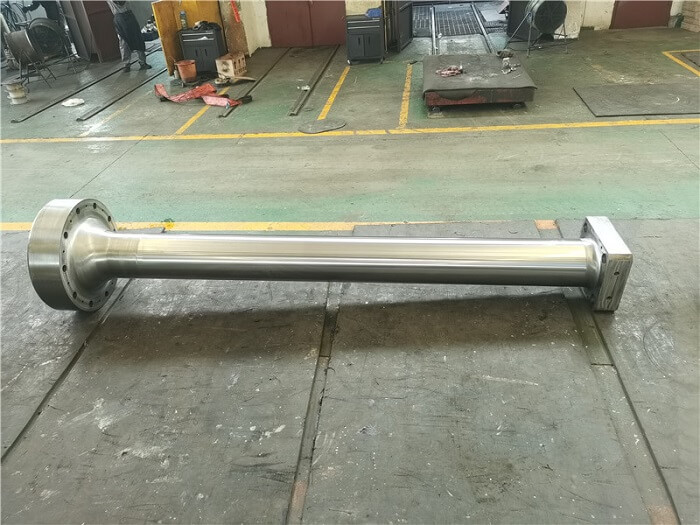
The long, solid or hollow metal rod within a hydraulic cylinder that can extend and retract—protruding outside the cylinder—is known as the hydraulic press ram. It is the core component responsible for delivering pressure output in hydraulic press machinery.
Functions of the Hydraulic Press Ram
1. Power Transmission Function (Primary Function)
The piston rod connects to the piston at one end and extends outside the cylinder at the other, serving as the medium for outputting hydraulic thrust.
Hydraulic fluid drives the piston, generating hydraulic force. The hydraulic cylinder ram transmits this force to molds and tooling to perform forming operations such as pressing, stamping, forging, and extrusion, effectively converting hydraulic energy into mechanical energy to perform external work.
2. Guiding and Positioning Function
Working in conjunction with the guide sleeve at the front of the cylinder, the piston rod constrains the piston to linear reciprocating motion. This prevents the piston from tilting within the cylinder and scratching the inner cylinder wall.
The lower end connects to the moving slide, ensuring vertical up-and-down movement. This ensures uniform force application on the workpiece during pressing, thereby preventing dimensional deviations in the product and uneven (one-sided) wear on the mold.
3. Load-Bearing and Pressure-Resistant Function
Withstands the full pressing load. In cold forging presses and hot forging hydraulic presses, the ram must endure immense pressure and impact loads over long periods.
Resists bending forces and moments caused by off-center loading. If the workpiece is misaligned, the piston rod withstands the resulting lateral forces, protecting the main cylinder body from damage.
4. Sealing and Interface Function
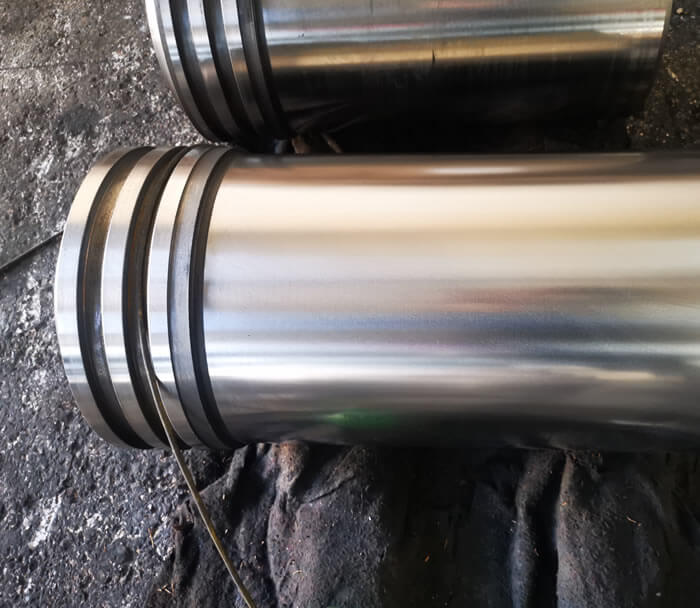
The hydraulic cylinder ram features a high-precision chrome-plated surface that interfaces with dust seals, oil seals, and guide bands.
- The oil seal fits tightly against the rod surface, retaining hydraulic fluid within the cylinder and preventing internal leakage.
- The dust seal scrapes away metal chips, coolant, and dust from the rod surface, preventing contaminants from entering the cylinder and scratching the seals or the cylinder barrel.
5. Auxiliary Installation and Connection Features
The outer end of the hydraulic press ram is designed with threads, a flange, or a T-slot to secure moving slides, pressing heads, or molds, facilitating the mounting and dismounting of tooling. Some models feature internal hydraulic channels to enable compound operations such as ejection and back-pressure control.
6. Cushioning and Stable Operation
During the reciprocating motion, the length of the piston rod determines the piston stroke. Integrated cushioning structures at both ends of the cylinder—combined with the rod’s stepped profile—facilitate deceleration and cushioning. This minimizes impact and vibration during rapid sliding, thereby enhancing the machine’s overall stability.
PDH is a professional hydraulic press manufacturer in China. We provide not only a range of hydraulic presses and production lines but also extensive hydraulic press technology expertise. If you want to know more. Contact us!