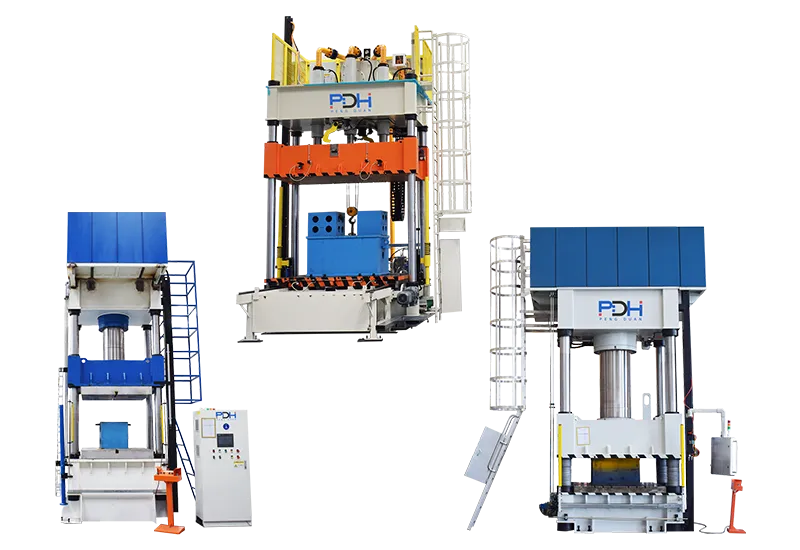
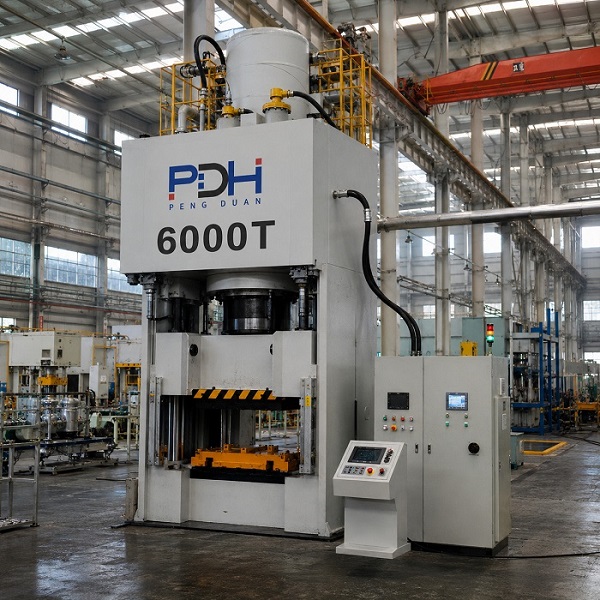
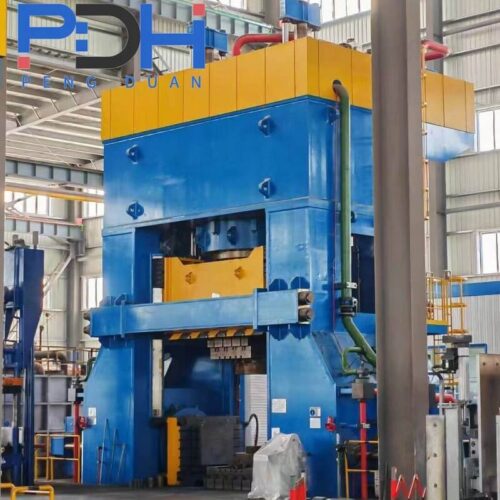
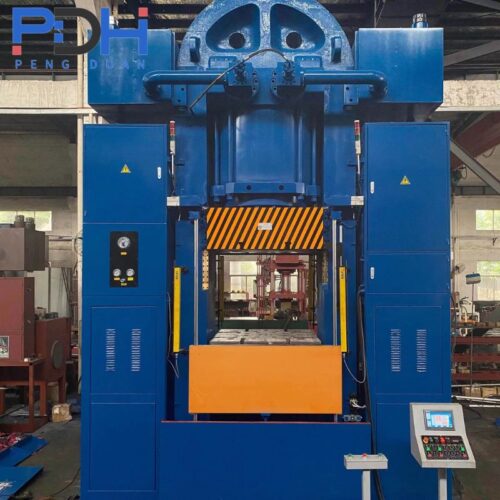
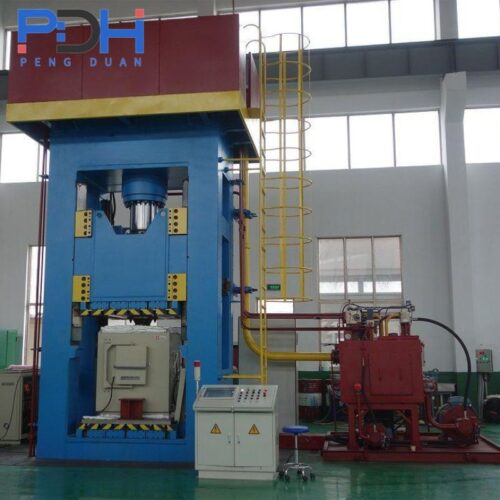
PDH’s isothermal forging press is specialized, precision hydraulic forging equipment developed specifically for the high-end sector of special metal forming. It integrates precise constant-temperature control, servo-hydraulic drive technology, a high-rigidity main machine structure, and an intelligent measurement and control system.
The equipment ensures that both the die and the workpiece maintain a constant, uniform temperature throughout the entire forging process. Leveraging low-speed, high-pressure operating conditions induces superplasticity in the metal. This significantly reduces material deformation resistance, making it perfectly suited for processing difficult-to-deform materials such as titanium alloys, nickel-based superalloys, and high-strength aluminum alloys.
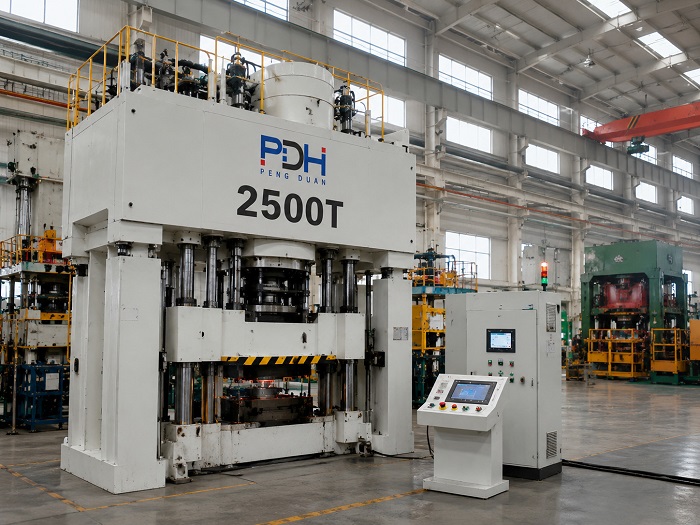
The entire machine operates with exceptional stability and achieves high forming precision, producing forgings with uniform microstructure and no surface defects. Our isothermal forging presses enable the near-net-shape forming of complex structural components, effectively reducing subsequent machining operations and enhancing material utilization efficiency. Widely applied across sectors such as aerospace, high-end equipment manufacturing, and the defense industry, this equipment serves as a core asset for the production of large-scale, precision load-bearing components and critical engine parts.
Working Principle of Isothermal Forging Presses
Isothermal forging technology involves simultaneously heating both the die and the workpiece to the forging temperature. The equipment applies pressure at an extremely low speed, inducing a superplastic state in metals that are otherwise difficult to deform. This significantly reduces deformation resistance, allowing the metal material to flow uniformly and fully into the die cavity, thereby achieving the integral formation of high-precision, complex-structured forgings.
Throughout the entire forging process, a constant-temperature system maintains thermal equilibrium between the die and the workpiece, thereby eliminating the quenching effect that the die would otherwise exert on the workpiece.
Features of Isothermal Forging Presses
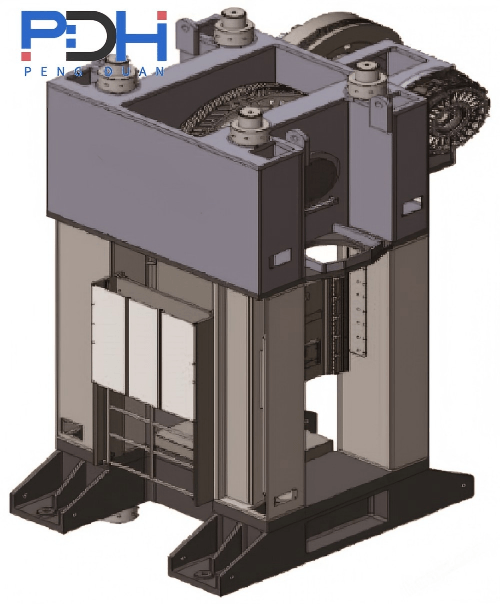
- Isothermal Forming Technology: The upper and lower dies, as well as the workpiece, are maintained within the same—or a nearly identical—thermal field. This effectively prevents surface cracks, folds, and structural non-uniformity typically caused by contact with cold dies.
- Automatic Demolding Mechanism: Upon completion of the forming process, the equipment automatically executes the demolding sequence. Optional configurations include: ejector-style demolding, lower die lifting combined with a workpiece stripping mechanism, and lateral auxiliary demolding mechanisms (for complex cavities).
- High-Precision Servo-Hydraulic Control: Features a servo-hydraulic system capable of multi-stage loading, including pre-pressing, main forming, pressure holding, and other phases.
- High-Temperature Die System: The die heating method can be optionally configured for either resistance heating or induction heating.
- Control System: Utilizes a PLC paired with an industrial touchscreen interface. Features also include data logging capabilities, as well as the real-time display of pressure-displacement curves, temperature curves, and other parameters.
Key Parameters of Isothermal Forging Presses
| Project | Unit | Small Series
(3000~6300 吨) |
Medium Series
(8000~16000 吨) |
Large-Scale Aviation Series
(20000~30000 吨) |
| Nominal Force | kN | 30000 ~ 63000 | 80000 ~ 160000 | 200000 ~ 300000 |
| Slide Stroke | mm | 800 ~ 1200 | 1200 ~ 1800 | 1600 ~ 2500 |
| Maximum Daylight | mm | 1500 ~ 2200 | 2200 ~ 3200 | 3000 ~ 4500 |
| Effective Table Dimensions (L × W) | mm | 1800×1200
~2800×1800 |
2800×1800
~4200×2800 |
4000×2800
~6000×4000 |
| Slide Downward Speed | mm/s | 5~15 | 4~12 | 3~10 |
| Forging Speed (Superplastic Range) | mm/s | 0.005 ~ 1 | 0.002 ~ 0.8 | 0.002 ~ 0.5 |
| Return Speed | mm/s | 8~18 | 6~15 | 5~12 |
| System Rated Oil Pressure | MPa | 25 ~ 31.5 | 25 ~ 31.5 | 25 ~ 31.5 |
| Slide Parallelism | mm/m | ≤0.06 | ≤0.05 | ≤0.04 |
| Positioning Accuracy | mm | ±0.2 | ±0.15 | ±0.1 |
Applications of Isothermal Forging Presses
- Aerospace: Titanium alloy blisks, turbine disks, primary load-bearing airframe frames, and beams.
- High-End Equipment: High-temperature alloys (GH4169), powder metallurgy alloys, and precision components made from specialized stainless steels.
- Advanced Materials: Titanium alloys (TC4, TA15), nickel-based superalloys, and superplastically formed aluminum alloys.
PDH’s isothermal forging presses can significantly enhance material plasticity and reduce forming loads, enabling the production of forgings characterized by high density, exceptional consistency, and superior surface quality. Please contact us if you have any requirements.
Related products

Related products

Related products
Related products
Related products
Related products
Related products
Related products
Related products
Related products

Related products