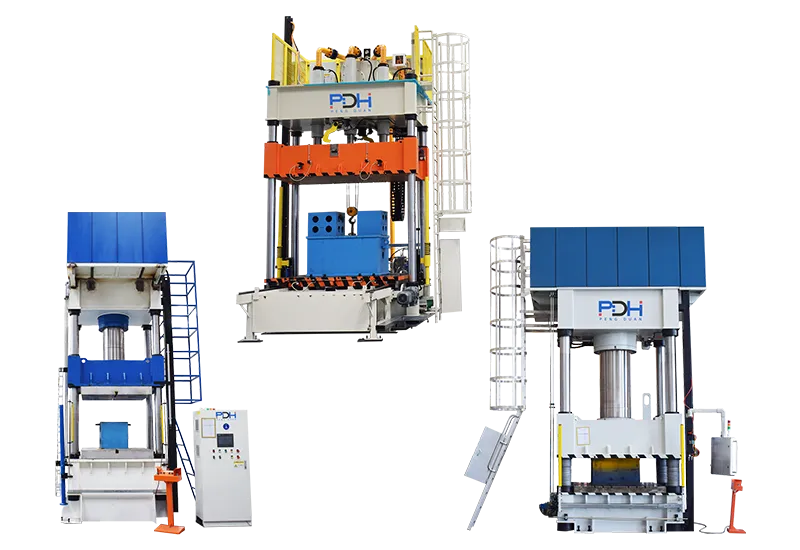
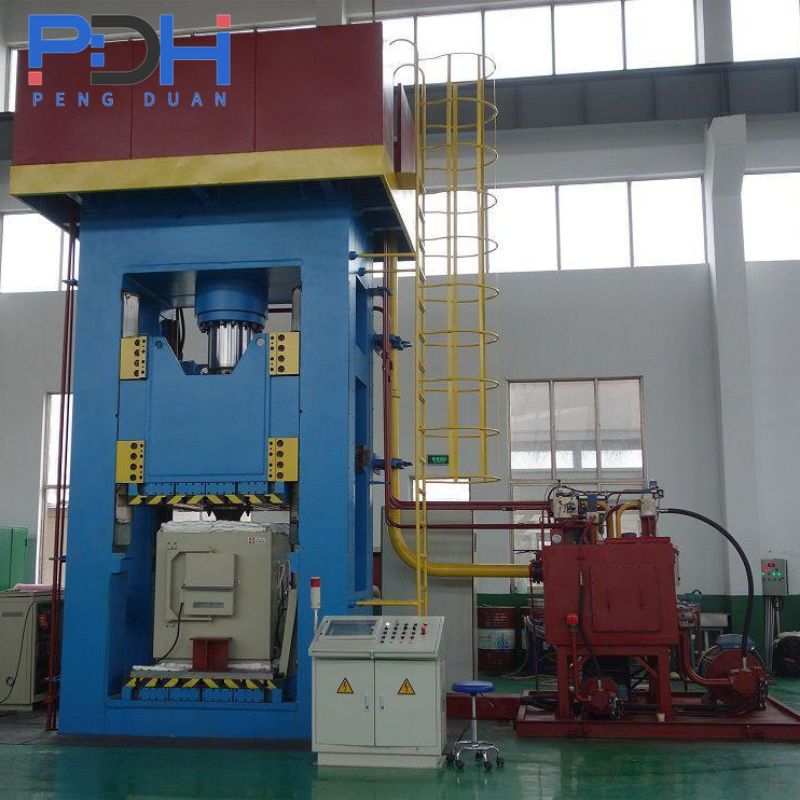
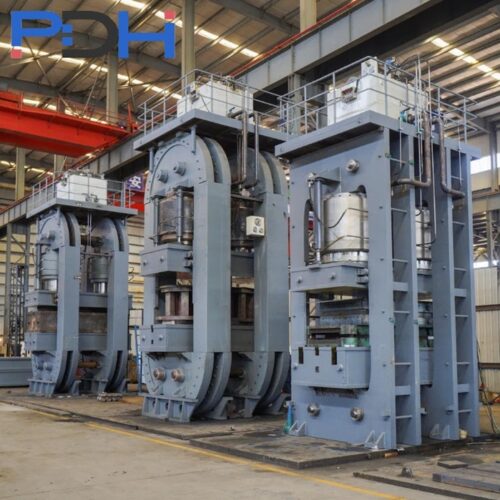
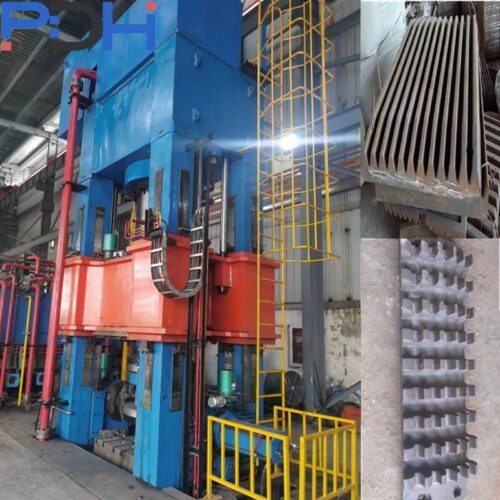
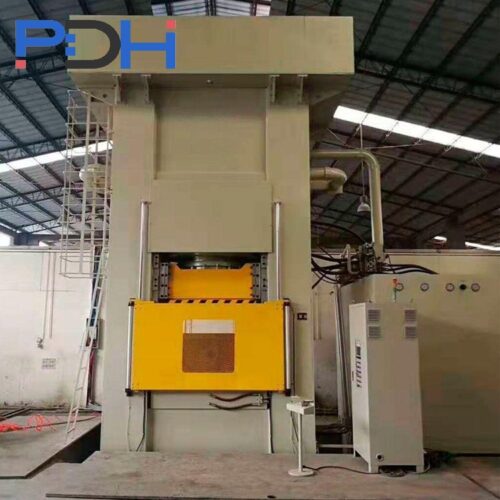
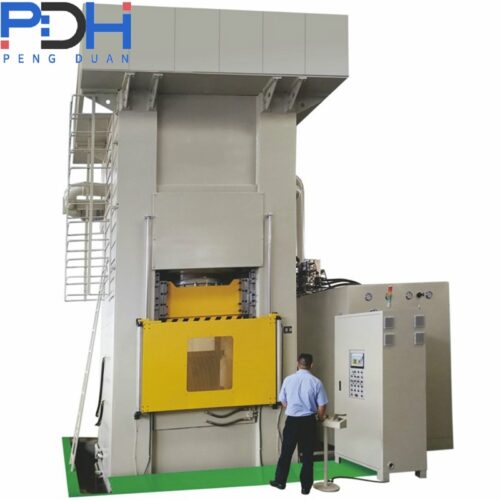
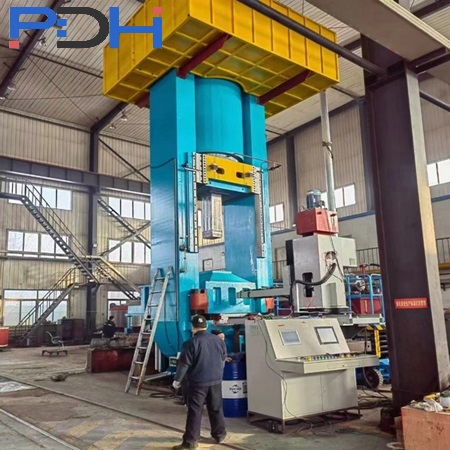
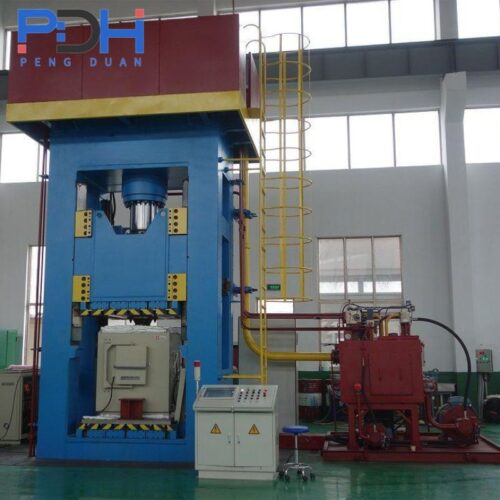
PDH hot forging hydraulic presses represent advanced equipment for high-precision forging and forming. They accommodate a wide range of processes, including multi-directional extrusion, upsetting, punching, and closed-die forging. These machines are capable of executing various functions such as rapid forging, standard forging, and pressure holding.
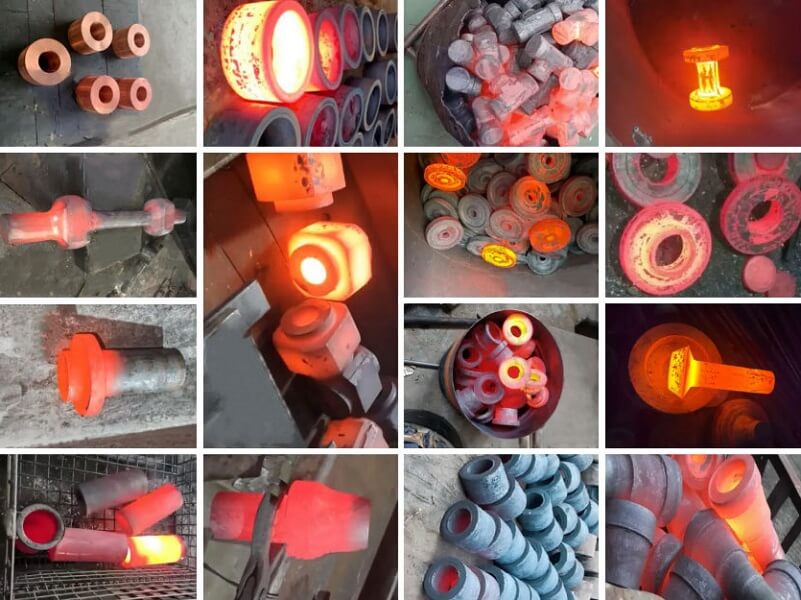
Furthermore, they meet the specific requirements of diverse forging techniques, including upsetting, drawing out, punching, mandrel expanding, and offsetting. Primarily, our hot forging presses are suited for the production of various special-sized forgings, as well as shaft-type, disc-type, and irregularly shaped components—such as bearing inner rings, flanges, axle shafts, couplings, crossheads, wheel hubs, and railway wheels.
Features of Hot Forging Hydraulic Presses
1. Hot forging presses utilize either a four-column or a frame-type structure. The equipment features a stable and reliable construction, a long service life, and a large working tonnage.
2. The forming process offers two distinct operating modes: constant-position pressing and constant-force pressing. Users may select either mode as required.
3. In accordance with specific stamping process requirements, the hot forging hydraulic press is capable of executing pressure relief, retraction, and pressure holding (at any designated position) during the main cylinder’s high-speed descent, deceleration, and pressing stages. Furthermore, the pressure, speed, and pressure-holding duration are fully adjustable.
4. The hot forging hydraulic press can be equipped with various auxiliary systems, including a servo energy-saving system, a quick die-change system, an automatic die spraying and lubrication system, and an automatic feeding system.
5. The hydraulic system employs advanced two-way cartridge valve control technology, effectively resolving complex hydraulic control challenges inherent to hot forging presses—specifically those involving high flow rates, high operating speeds, and rapid pressure relief.
6. The electrical control system utilizes a Programmable Logic Controller (PLC), thereby enhancing the reliability of the control architecture. This enables precise control over the forging hydraulic press’s speed, pressure, and pressure staging, while also facilitating seamless interlock control between the press and its auxiliary equipment.
Types of Hot Forging Presses
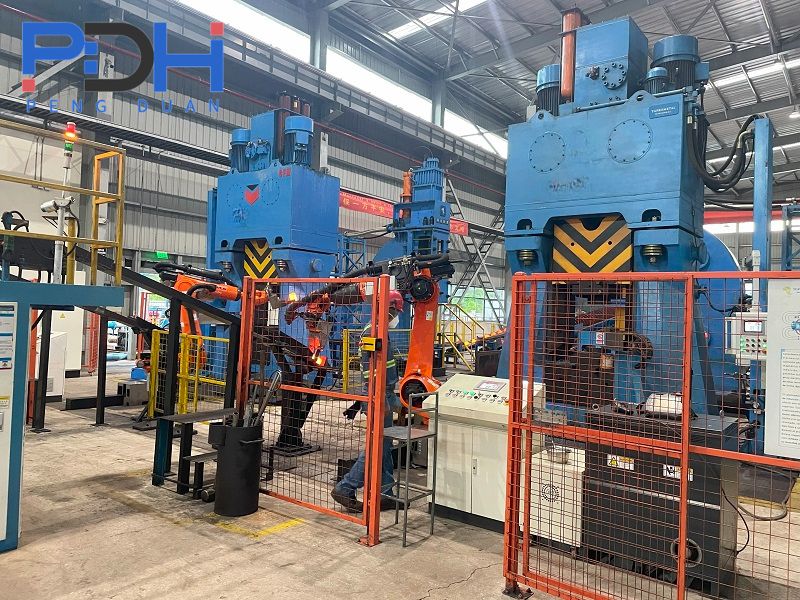
Hot forging hydraulic presses are categorized into free forging hydraulic presses, hot die forging presses, rapid forging hydraulic presses, multi-directional forging presses, and others.
1. Free Forging Hydraulic Presses
Free forging presses are capable of performing all free forging operations, including upsetting, drawing out, punching, piercing, bending, shifting, and shearing. They are primarily used to produce forged products such as shafts, bars, plates, discs, rings, as well as round and square components. These presses find application in fields such as aerospace, electric power, railways, mining, shipbuilding, and transportation.
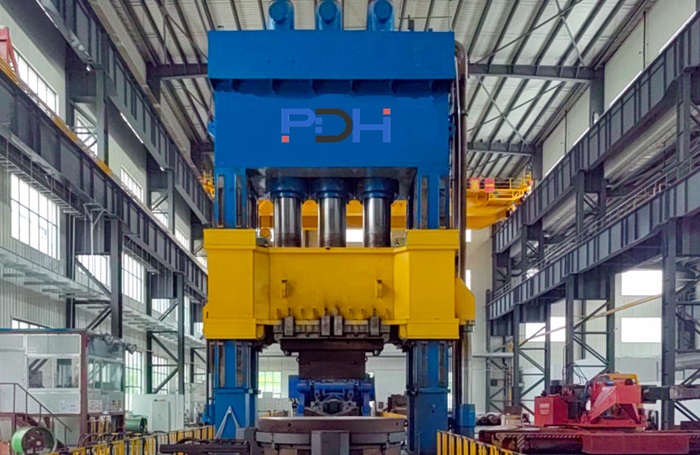
2. Hot Die Forging Hydraulic Presses
Hot die forging presses utilize a closed-loop control system, allowing for precise adjustment of pressure, speed, and position. This results in forged parts with tight dimensional tolerances, significantly reducing machining allowances and improving material utilization efficiency.
They are widely used in the production of critical components such as engine connecting rods, crankshafts, steering knuckles, turbine discs, and aircraft landing gear. Their primary applications lie in the automotive, construction machinery, marine machinery, and standard parts manufacturing sectors.
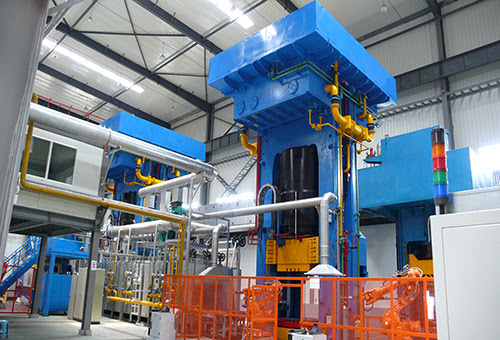
3. Multi-directional Forging Hydraulic Presses
Multi-directional forging involves simultaneously applying pressure to a workpiece from multiple directions after the forging dies have closed. This process enables the “one-heat, one-shot forming” of complex forged parts. It is primarily used for shaping small to medium-sized precision forgings, such as automotive axle shafts, universal joint crosses, excavator bucket teeth, and high-pressure three-way valve bodies. These presses are widely utilized in the aerospace, automotive, and nuclear power industries.
Related products

Related products
Related products
Related products
Related products

Related products
Related products
Related products
Related products

Related products
Related products