The mainstream manufacturing processes for car aluminum alloy wheels are mainly divided into 3 categories: casting, forging, and spinning. This article will provide a detailed introduction from the perspectives of principle, process, characteristics, and application scenarios.
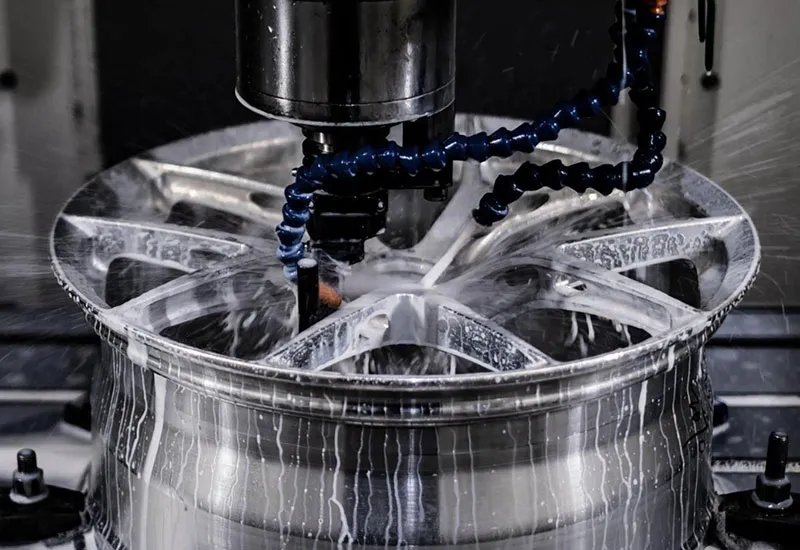
1. Casting Process
Principle: Molten aluminum alloy is poured into a mold, cooled, and solidified to form the wheel. It is low-cost and has high mass production efficiency, making it the most mainstream process currently.
1) Gravity Casting
Process: Molten aluminum flows into a metal mold under normal pressure using gravity. The mold is filled and solidified by the weight of the molten aluminum itself. After cooling, the mold is opened, and the part is removed.
Characteristics: Simple equipment and the lowest cost. However, it is prone to internal porosity and looseness, resulting in the lowest strength. It is now largely obsolete.
2) Low-Pressure Casting
Process: Molten aluminum is smoothly forced from a holding furnace into a mold cavity using low-pressure gas (typically 0.02–0.06 MPa) and solidified under pressure.
Characteristics: Dense structure, few defects, high yield, and stable performance. It is one of the most mainstream production processes for automotive aluminum wheels.
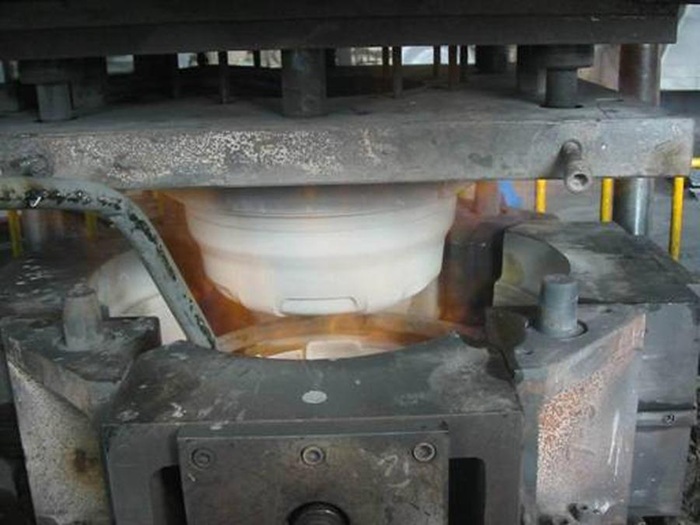
3) Squeeze Casting (Liquid Forging)
Process: Aluminum alloy material is forced through a mold using an extruder.
Characteristics:
- High material utilization rate;
- Good strength;
- Suitable for special cross-sectional structures;
- Densest structure, performance close to forging;
- Suitable for complex structures, but the cost is higher than ordinary casting.
2. Forging Process
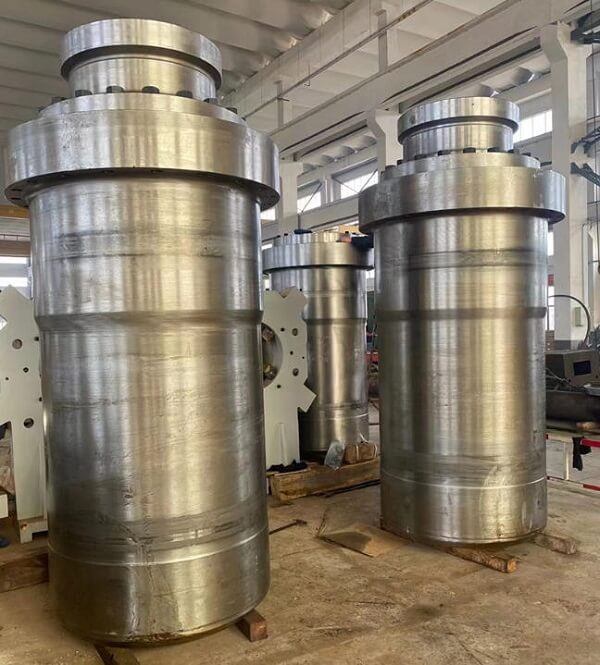
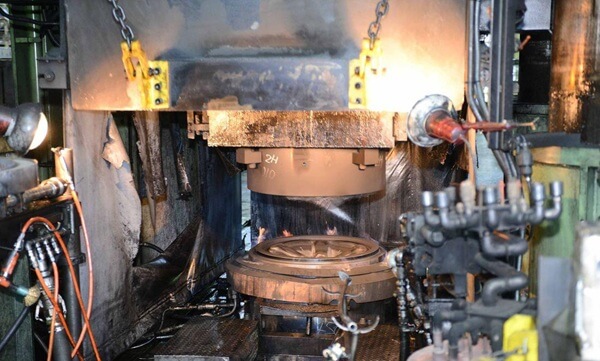
Principle: Solid aluminum bars are heated and repeatedly forged using forging presses ranging from thousands to tens of thousands of tons, causing strong plastic deformation of the metal to obtain a high-density blank.
Common equipment includes:
8000-ton forging hydraulic press
10000-ton forging hydraulic press
15000-ton forging hydraulic press
Process:
Aluminum bar cutting → Heating (460~480℃) → Multiple forging (pre-forging/final forging) → Trimming/punching → T6 heat treatment → Finishing.
Advantages:
- Highest strength
- Best toughness
- Lightest weight
- Excellent impact resistance
- Long fatigue life
- High safety performance
Disadvantages: Expensive equipment, complex process, highest cost. It is mainly used in high-performance sports cars and high-end modifications.
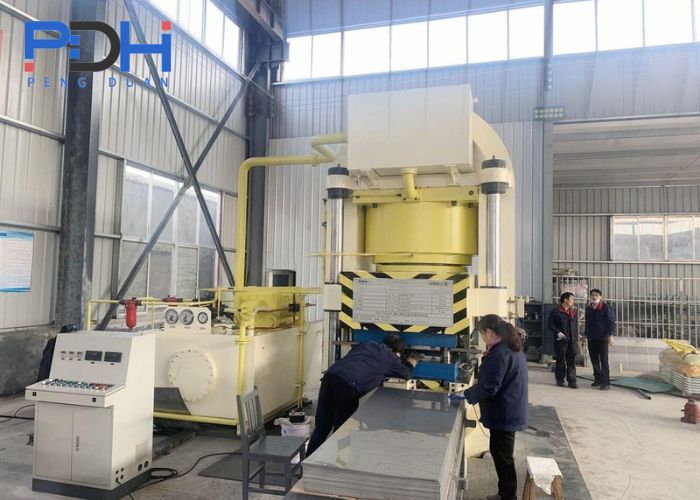
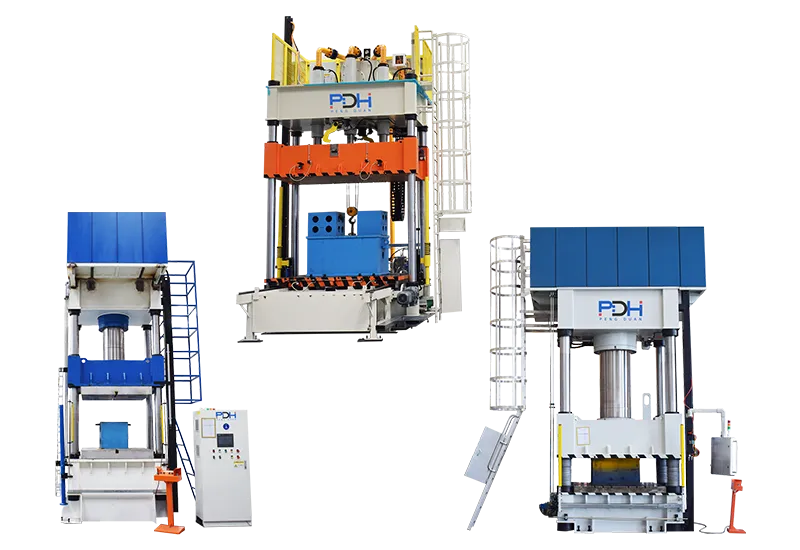
PDH, as a professional hydraulic press manufacturer, can provide turnkey aluminum alloy/carbon steel/alloy steel wheel hub production lines for our customers. Please contact our sales team if you have any needs.
3. Spinning Process
Principle: Combining casting/forging and spinning techniques. A pre-made spoke blank is heated, and the rim portion is forcefully stretched and compressed by rotating rollers, making it thinner, longer, and stronger.
1) Casting Spinning
Process: Low-pressure casting of a spoked blank → Heating (350~400℃) → Spinning to stretch the rim → Heat treatment.
Features: Performance superior to ordinary casting, close to forging. Good lightweight effect, high cost-effectiveness, mainstream choice for mid-to-high-end vehicles.
2) Forging Spinning
Process: Forging blank preparation → Spinning finishing.
Features: Combining the high strength of forging and the high precision of spinning. Performance is closest to pure forging, but the cost is slightly lower.
4. Comparison of the Three Major Processes
| Characteristics | Casting | Spinning | Forging |
| Material Structure | Coarse grains, prone to porosity/looseness | The rim has a fibrous structure, dense | Continuous metal flow lines, defect-free, densest |
| Mechanical Properties | General | Good (15%+ higher than casting) | Optimal (highest strength) |
| Lightweight | Relatively heavy | Relatively light (10-15% lighter than casting) | Lightest (20-30% lighter than casting) |
| Production Costs | Lowest | Medium | Highest |
| Production Efficiency | Highest | Higher | Low |
| Applicable Scenarios | Family cars, economy cars | Mid-to-high-end passenger cars, performance cars | Luxury cars, sports cars, racing cars, modifications |